
Product Description
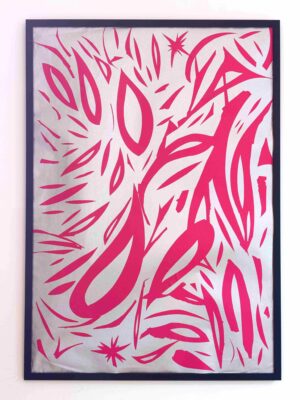
It is noticeable in Zitko’s art how difficult it is for her to let the object be born out of graphism. Zitko wants to persevere as long as possible in the darkness of the graphic. He wants to stay close to the origin of the graphic and delays the birth of the object to the point of refusal. Those who, like Zitko, disrupt the programmed process from the graphic to the object, returning again and again to the graphic source and arriving at the object only by intricate, complicated detours, not only resist but also fight back. He who wants to leave the object unborn resists the osteo-muscular equipment of the hand and thus the technical-mechanical gesture. He wants to free the gesture from the tool, the hand from its mechanical features. This is where the nervous, annoying, infantile, unskilled, uncontrolled, psychopathic quality of Zitko’s graphism comes from, because he does not want to submit – not to the smoothness of technical gesture, not to the mechanics of an osteo-muscular tool, not to the object and not to society. Those who attack the grasping for the object refuse the reduction of the graphic and want to develop the gesture further, beyond the mechanical into the spiritual, seeking states of emotion. The corrida of the graphic has as its death the object and as its victory the emotion, and Zitko wants to live, even if the will to live is already sagging in the writing of the second I. The object is not born. Those who want to leave the object unborn, who seek the state of the unborn, only seem to want to learn to die, but in reality want to find a life other than the objectified, commercialised, mechanical, constricted and limited life that society presents to them. His rhythmic graphism are therefore incantations to take him to a primal state (of ecstasy, of freedom) via the origin of the graphic.
Text excerpt Peter Weibel
Year: 2009